
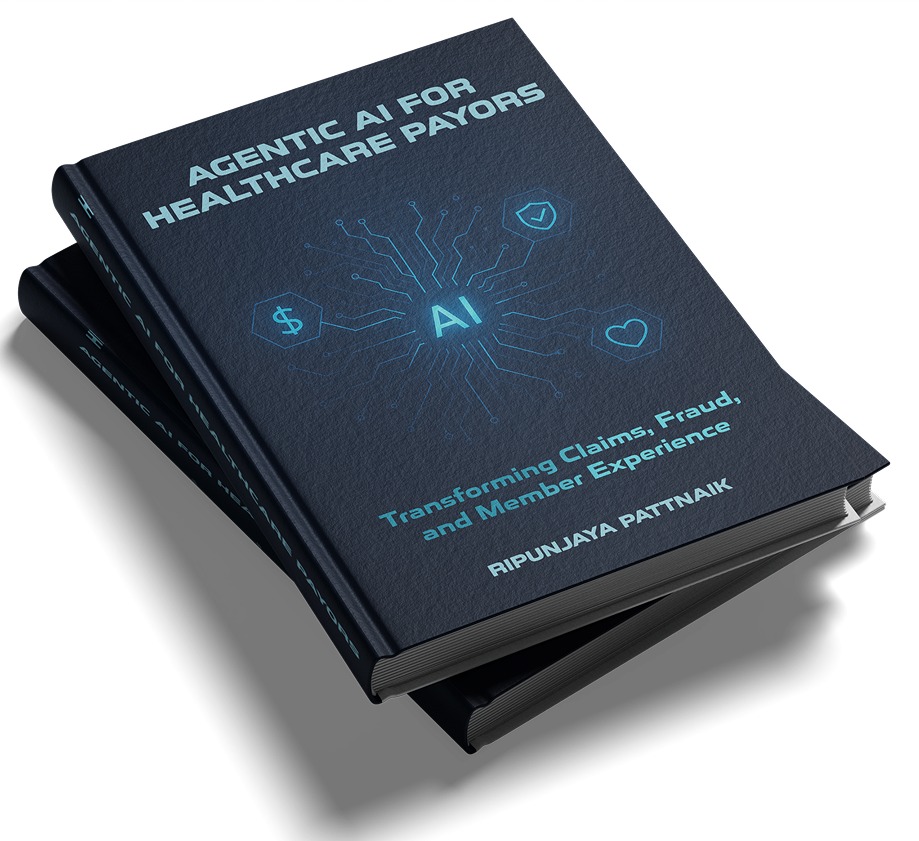
AI Agent for Healthcare is transforming the practice of payment processes, adherence, and support for the members. The first is that it automates routine tasks, but more importantly, it learns and becomes adaptive. Thus, organizations can make quicker decisions and make fewer mistakes. Additionally, such agents enhance fraud prevention, accelerate operations, and enhance resiliency in operations. With a more complicated healthcare system, the implementation of agentic AI is not only possible but a necessity. As well, AI medical literature presents practical applications, providing advice to executives and engineers. This way, the adoption of AI agents guarantees improved service and increased confidence in the functioning of payors.
The AI Agent for Healthcare.
An intelligent AI Agent for Healthcare is intelligent. It deliberates, makes decisions, and responds in real time, as opposed to systems that remain unchanged. This leads to quicker and more precise claims adjudication. It is also useful in identifying anomalies in the billing process and preventing fraud effectively. Switching between manual and agentic AI leads to the fact that the administrative burden is decrease significantly. More importantly, conversational AI for healthcare improves interactions with patients and communication with providers. Also, AI health books include models of how to make these agents work. Altogether, AI agent adoption will change the work of payor organizations and make working processes more efficient and consistent.
Advantages of Conversational AI Agent for Healthcare.
AI Agent for Healthcare will promote communication and interaction. As an example, it assists patients in receiving a prompt response and precise information. In addition, payors are able to answer queries more quickly, minimizing aggravation and delays. As a result, the experience of the members becomes much better. Moreover, this technology is use to supplement AI agents in healthcare by combining natural language processing with decision-making automation. It also leaves less work to the support personnel. Such integrations, frequently discussed in AI healthcare books, exhibit an observed effect on operations. Altogether, conversational AI for healthcare reinforces the effectiveness of work and the satisfaction of medical systems, building purer, more reactive payor environments.
AI Agent for Healthcare Books Guide for Transformation.
Books about AI Agent for Healthcare provide some insight on connecting theory and practice. They describe how agentic AI enhances claims, compliance, and operational procedures. Besides, they give case studies of successful deployments. Thus, executives can implement strategies without fear, and engineers are provided with technical frameworks of actual implementations. Moreover, the books focus on the integration of AI agents in healthcare with conversational AI for healthcare to produce the best outcomes. They depict realistic actions, traps, and solutions for scaling. To put it bluntly, AI healthcare books are important assets that organizations should lean on to automate their processes for modernization and provide the best member experiences.
AI Future of Healthcare Agent.
The prospects of AI Agent for Healthcare are bright and dynamic. The higher the level of technology, the higher the number of decisions that the agents will decide on their own. Additionally, diversification with conversational healthcare AI will bring in streamlined and personal experiences. Furthermore, the information provide in AI healthcare books can be use by the payors to develop long-term strategies. Consequently, businesses are increasingly efficient, free of errors, and reliable. Also, it is continually trained on actual data, which implies that agents are evolving as requirements evolve. Essentially, integrating AI agents, conversational, and healthcare book knowledge sets the stage for intelligent, strong, and future-resilient healthcare payers.
AI to Improve Member Experience.
With AI agents, the experience of members is enhancing significantly. They allow claims to be process faster, prevent fraud less effectively, and do so more correctly. Additionally, natural healthcare conversational AI lets members engage in a natural manner with systems and get immediate help. This leads to more satisfaction, and organizations develop better relations. This is one of the aspects that are commonly focus on in AI healthcare books, associating technology with real-world gains. Moreover, the incorporation of the AI agents plays down repetition, which allows employees to deal with important decisions. Thus, an AI agent in healthcare not only streamlines operations but also provides the best experience to each member.
Conclusion
Conclusively, AI Agent for Healthcare is transforming payor organizations. It has far-reaching effects, given its role in automating claims or fraud prevention. Healthcare conversational AI serves as an additional level of communication that will produce a smooth member experience. Also, AI health books can be use to deliver practical instructions, which facilitates effective implementation. Finally, the adoption of agentic AI changes operations, instills confidence, and brings about more desirable results. With the healthcare sector constantly undergoing changes, the use of AI agents will be supportive of efficiency, accuracy, and resilience. Thus, any progressive payer has to consider adopting an AI agent in healthcare to stay competitive, innovative, and member-oriented in this fast-evolving sector.